One step at a time


Reindeer
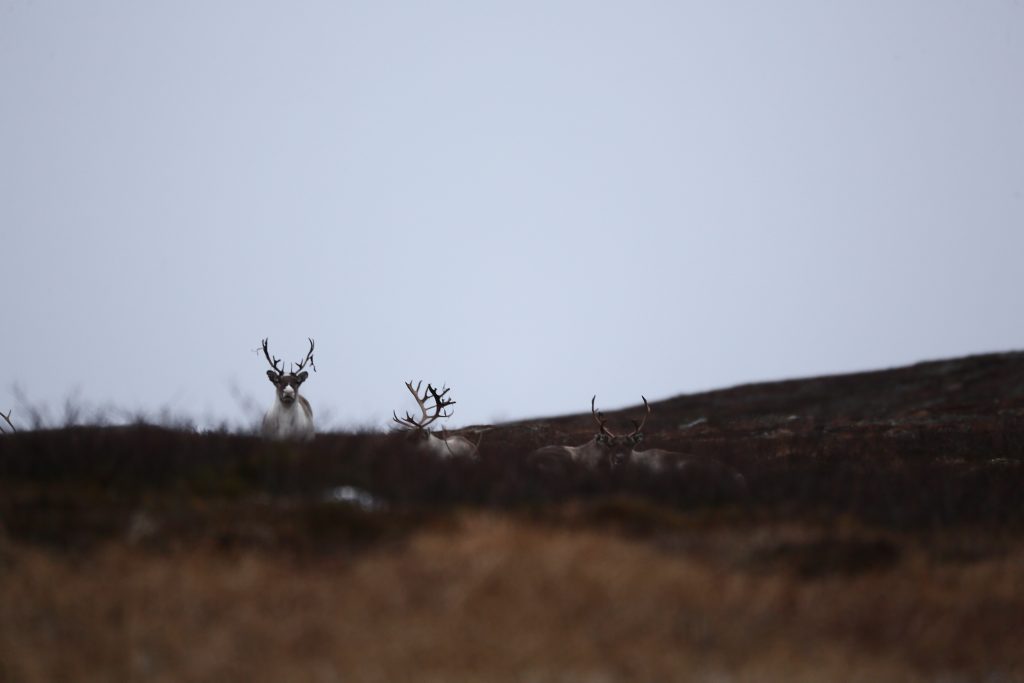
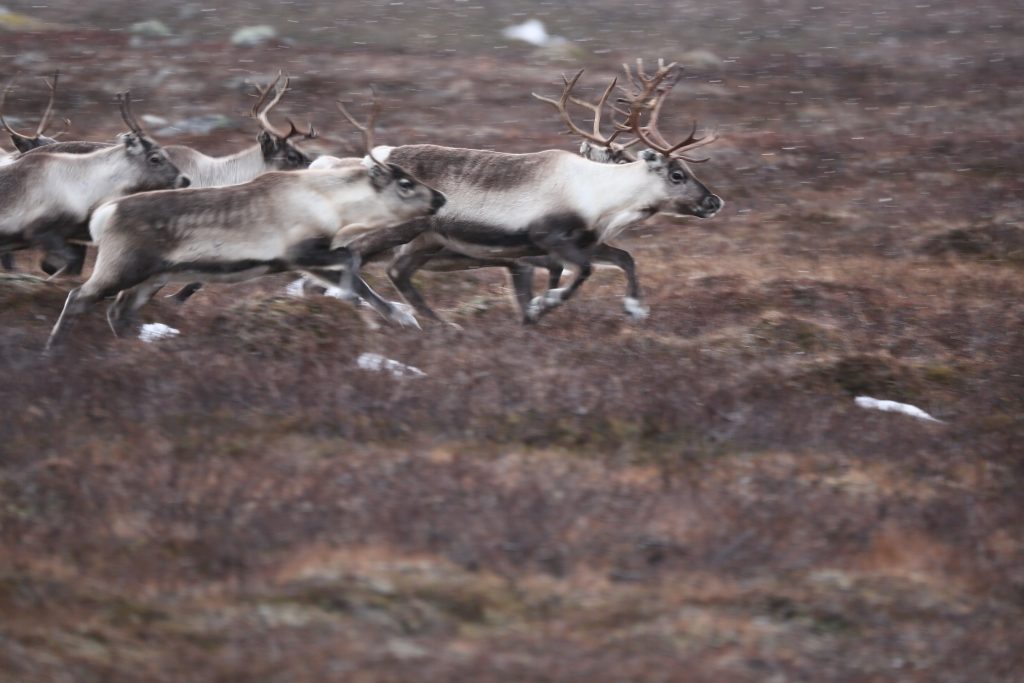
Reindeer, both domestic and wild, migrate from late winter to early summer. They can travel a few hundred kilometres. In the spring, reindeer move towards the coast and settle on the peninsulas. Semi-domestic reindeer live mainly in the Arctic. Wild reindeer live in the mountains of the south of the country. Weight varies greatly throughout the year. On average, males weigh about 100 kg in summer. Females are smaller and weigh about 75 kg.

Reindeer in Norway
Northern Norway is an arctic environment characterized mainly by its polar climate. The average temperature for the warmest month is 10oC and there are virtually no frost-free days. This area is also characterized by tundra-type vegetation. It is a formation of discontinuous, shaved vegetation, composed of grasses, lichens and some dwarf trees. Beyond the polar circle, we observe the first day and night of 24 hours. The further north you go, the more polar nights and nightless days are. In addition, the change in the duration of the day in the spring and fall occurs much more quickly at the higher latitudes. Southern Norway has a much more temperate and humid, oceanic climate. Temperatures are a little higher along the coast thanks to the Gulf Stream.
Environmental assets and conditions
Reindeer that live at very high latitudes are subject to large temperature variations between summer and winter (from 15 to -40 degrees Celsius). In a cold environment, it can maintain a high body temperature. It can reduce or increase the amount of heat. In winter, it has a fur of excellent insulating value that provides an effective barrier against excessive heat loss. Reindeer also restricts heat loss through physiological mechanisms. Finally, behavioural responses such as curling up or searching for microclimate areas are observable. This can also reduce heat loss in a cold environment. The moult allows the insulating value of the fur to vary according to the season. Reindeer also choose cool grazing areas and go as high as possible in the mountains during the hottest summer days. In polar regions, animals are almost constantly subjected to critical temperatures, when cold weather is associated with a total absence of sunlight.
The coat
The reindeer’s coat is a relatively good insulator thanks to the large amount of air enclosed between the hairs. The interposition of an insulating layer such as fur between the skin and cold air reduces or eliminates heat loss. The heat produced by the reindeer’s body in summer is always higher than that produced in winter, regardless of its activity. The insulating power of a fur depends on the amount of air trapped between the hairs and the resistance of the coat to the convection movements of the air in the fur.
In deer, insulation depends on the air in the spinal areas of the long, hollow, thick hairs and the layer of air held in the woolly hairs forming a short, dense protective layer. The physical structure of the fur (length, diameter and density of the hairs) determines its effectiveness as an insulator. The reindeer’s coat is very insulating. It is the Deer that has the highest density of hair per cm2.

Its coat is composed of guard hairs and woolly hairs. Woolly hairs are thin, very flexible, usually short and wavy. They are devoid of bone marrow and the cuticle is made of upturned scales allowing the strands to be attached to each other. This felt provides excellent thermal insulation. The density of woolly hairs in reindeer is 2000 hairs per cm2. Each hair is attached to a sebaceous gland and a small, smooth muscle. The secretion of the sebaceous gland lubricates and waterproofs the surface of the hair. The coat therefore remains dry which allows the animal not to suffer from rain or snow. When it is lying, the snow does not melt under it, just as the frost does not accumulate on the coat. It also remains quite insulating when reindeer pass through large bodies of water, especially during their migrations.
The Importance of Fur
In addition, the reindeer is the only deer to have a hair-covered snout. They protect this usually very sensitive area from the cold and reduce heat loss. It also allows the reindeer to put their nose in the snow to dig and look for food. Reindeer can withstand very low temperatures in winter, without altering their metabolism, thanks to the insulation of its fur. In summer, high temperatures require an adaptation of this insulating power, which is ensured by moulting. In summer, the fur is more sparse, contains less woolly hair and allows a good dissipation of heat. The skin is thin and the sweat glands and sebaceous glands are developed.
Adaptations to light
The Arctic regions beyond the polar circle in which reindeer live are subject to considerable variations in the photoperiod. They are also exposed to light conditions in which the day-night cycle is virtually absent or very reduced for long periods of time each year. This happens during the winter when the sun stays permanently below the horizon line and during the summer when it never disappears. These conditions are a real challenge for biological rhythms because in general continuous light destroys the rhythm of melatonin and permanent darkness desynchronizes biological clocks.
The activity of the reindeer of Norway in the summer is distributed evenly over the 24 hours of light, they can be active at noon as at midnight. The reindeer of Norway are therefore able to respond to very small variations in brightness during the day. Either they incorporate the low light information available in winter, or their biological clock is removed and the activity is regulated instead by variations in light intensity. Reindeer seem to have adapted to the bright conditions of the high latitudes by a general reduction in the strength and activity of their internal clock.
Competition and reproduction
The rutting period, characterized by spermatogenesis, lasts two months, from mid-September to mid-November. The rut takes place regularly even in the absence of females. Unlike other Ongules, male reindeer do not use their slabs during this period. The stallions are reeling in the sign of aggression. The hairs of the snout bristle and the muscles of the neckline contract. Food intake is severely reduced or zero and males lose a lot of weight. Mating occurs mostly at sunrise and dusk. Only the dominant male can protrud from the females.
The woods
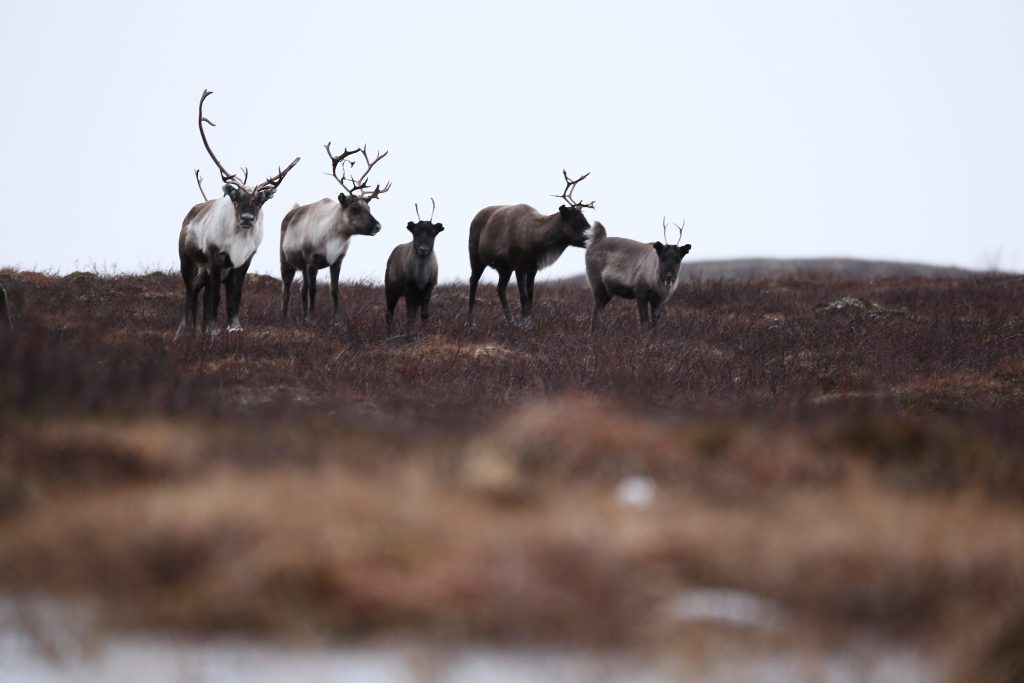
Reindeer are the only deer whose both sexes carry antlers. Even sterilized animals have them. The antlers are made up of velvet-covered bone tissue that consists of an epidermis and a derm with sebaceous glands, hairs, blood vessels and nerves, among others. The woods weigh about 7 to 10 kg and measure up to 120 cm in adults.
The heaviest animals have the largest and heaviest woods. Heaviest males (who can weigh up to 150 kg) can carry 12 kg of antlers. The size of the woods depends on the amount of food available because their manufacture costs a lot of minerals. In reindeer, calcium content and skeletal density decrease during wood growth. The minerals contained in the woods are therefore available in limited quantities. The woods are not only used as weapons but are also important in choosing a partner at the time of the rut.
Food in winter
In winter, reindeer have to dig snow to find food. They can dig up to 70 cm deep. Dominant animals tend to use holes made by dominated animals. The fawns are almost totally dependent on their mother to eat. They feed in the hole she has dug, while sharing a hole with her cub does not cost the mother energy.
Sharing a hole with its mother affects the fawn’s weight loss during the winter. The hole is less often taken by another fawn if the mother is dominant. In addition, small children spend less energy digging if they eat in the same hole as their mother. In reindeer, the status of the mother particularly influences the weight of female fawns, which are more likely to stay with their mothers than males. In addition, they are generally larger than females and are therefore less likely to have their hole caught by another fawn.