One step at a time


The Puffin Monk, Fratercula arctica
Description
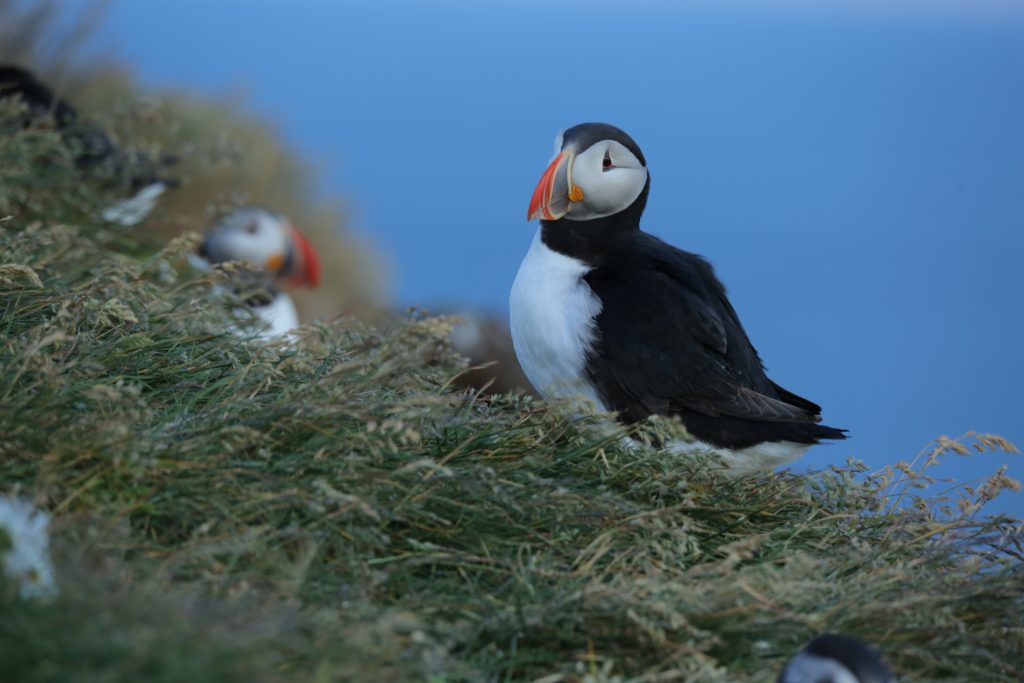
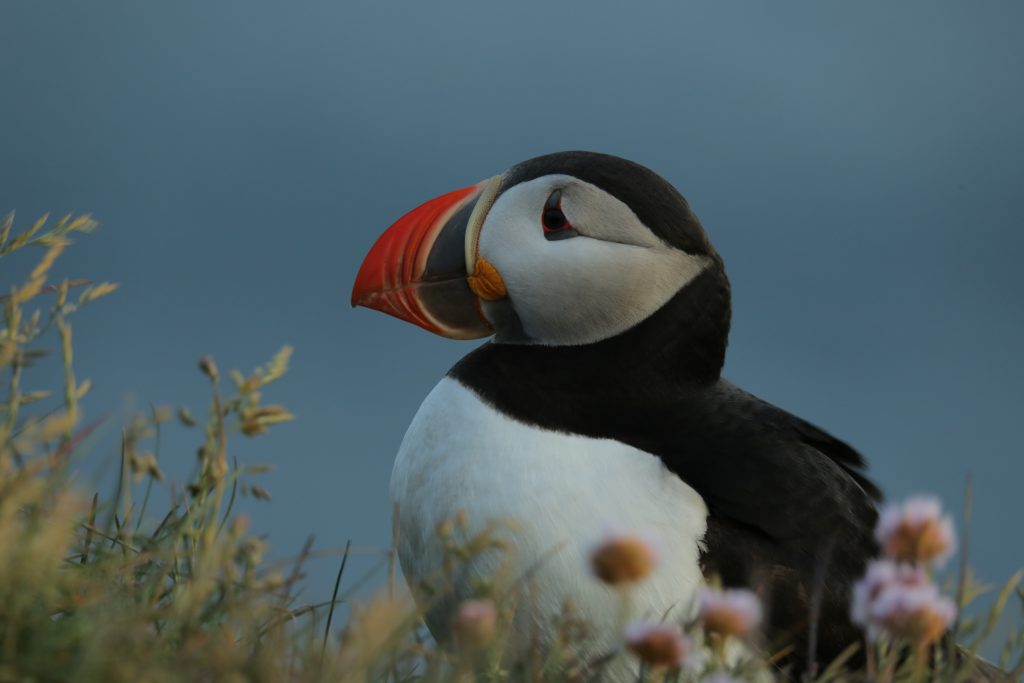
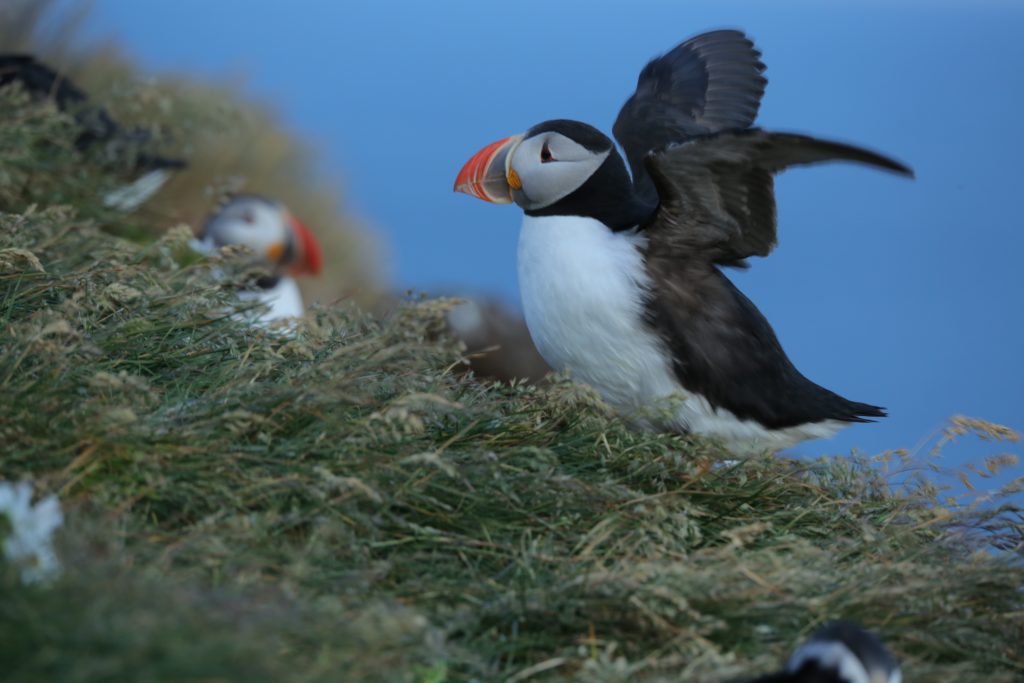
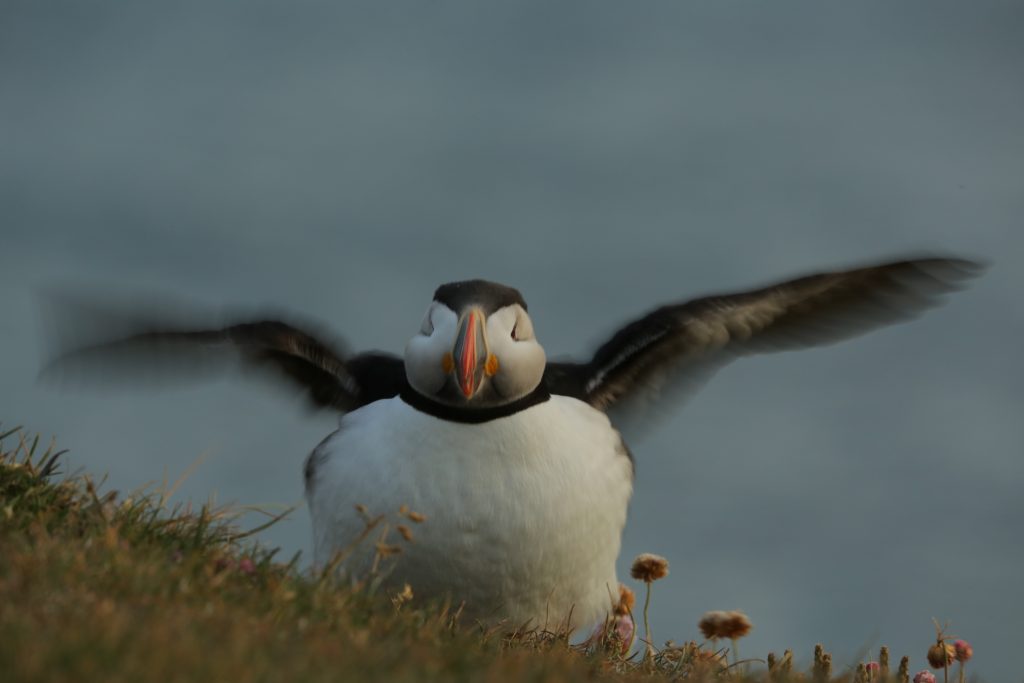
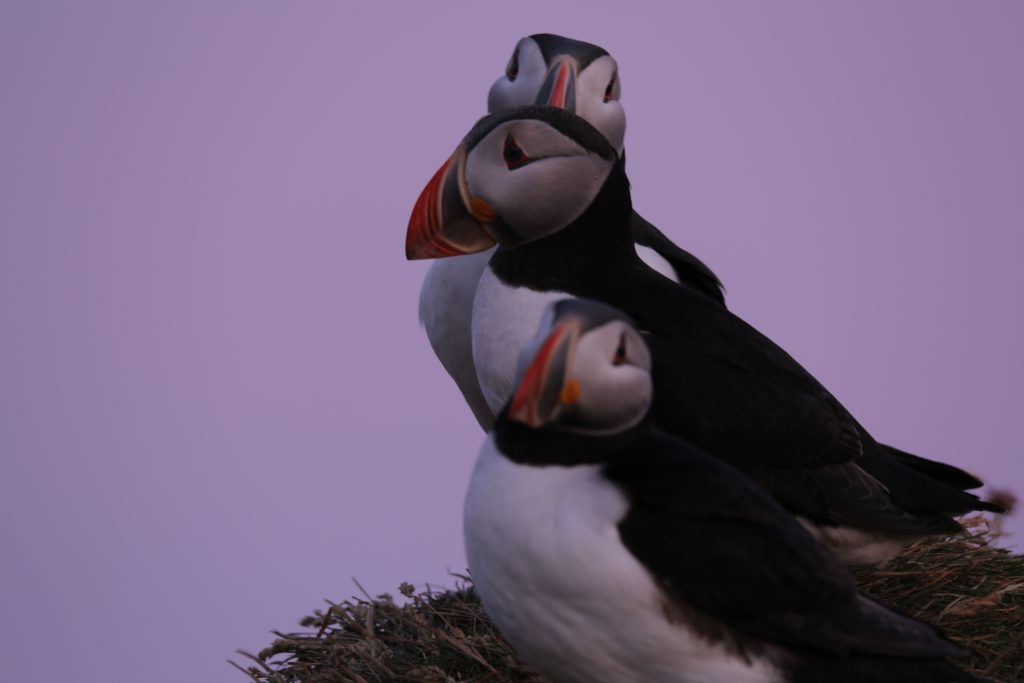
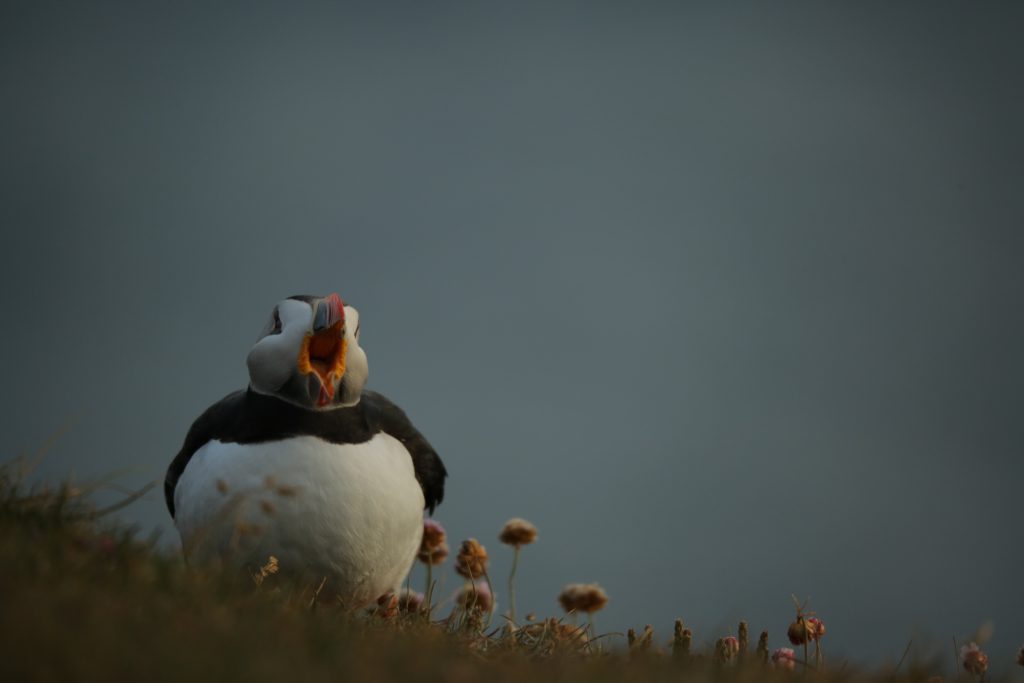
The Puffin is an alcida with a triangular beak. It is massive and colored with a bluish diamond surrounded by yellow towards the base. The head is big with a collar and a black cap. The legs are orange red. The sexes are the same. The ornamental corneal patches of the beak disappear after nesting. The beak then becomes smaller, predominantly yellow and grey. In juveniles, the beak is even thinner than in adults and the legs are dirty pink.The flight is beaten, very fast and direct, the wings appear abnormally small compared to the size of the body. The body is about 30 cm long and weighs between 350 and 600 grams.
Moults
For adults, after the breeding period, a partial first moult occurs between July and September. The feathers of the head and body are replaced. A second moult occurs between January and February and affects the feathers of the wings and tail. New ornate plaques appear just before the return to the colonies. For birds out of the nest, only one moult occurs between March and July.

Range
Mainly puffins are spread over Northern Europe. A small population nests on the West Atlantic coast. It is also found in Russia, Norway, Greenland, Iceland and Canada. For most individuals, the Iberian Peninsula seems to mark the southern limit of winter dispersal.
Place of life
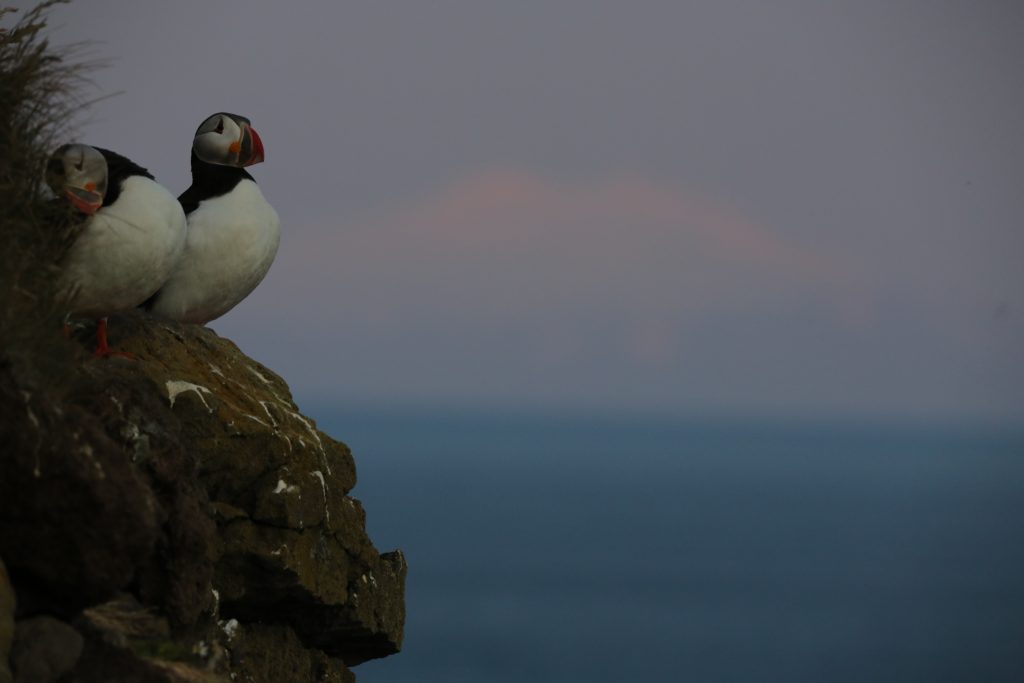
The Puffin nests in a colony, inside a burrow that he digs himself. Three habitats are used: the slope break zone at the top of the small cliffs overlooking the sea, the gentle slopes with low vegetation and soft soil, the areas of scree showing erosion under the boulders.
Reproduction and breeding
Egg-laying dates vary depending on weather conditions. As a rule, spawning takes place around April. A single egg is laid. The incubation lasts 39 to 42 days and the breeding between 38 and 53 days on average. The female incubse longer and takes care of the chick more often than the male. He spends more time defending the burrow. The chick leaves the nest with the possibility of flying and, therefore, no longer receives any food support from its parents.
The average number of young per pair increases with nest density. A predated or disturbed colony may see its productivity reduced by 75%. In the event of food shortages, adults promote their survival at the expense of that of the chicks. But regulatory mechanisms allow chicks to resist: variation in growth rate, longer breeding period, differential anatomical growth.
The age of the first reproduction is 5 to 6 years. The first return to the colony is around the age of 2-3 years, but the occupation of a burrow does not occur until the age of 4. The maximum lifespan observed is about 33 years.
The annual survival of puffins depends on the temperature of the water and the amount of predated fish. Although their ecological niches may also be occupied by other bird species, this does not seem to bother them undue.
Power
Puffins are able to pass according to the available resources of various fish species such as Capelans, Herrings, Sprats and Spears. They are all prey with high energy value. The Puffin knows how to be opportunistic and change prey for its chick depending on the available resource.In winter, invertebrates can also play a significant role in feeding.
The Puffins catch their prey by immersing themselves from the surface and then propelling themselves underwater through their wings. It can reach a maximum depth of 60 m for food. It all depends on where it is located but also on the location of the resources. Prey are usually searched no more than a few dozen kilometres away.
People
There are about 6 million pairs between the West Atlantic coast, Iceland and Norway. The overall pattern over the past 30 years is a 1.5% annual increase in Iceland and the United Kingdom and a decrease in Norway and Ireland. The puffin is a true indicator of the preservation of breeding grounds. Populations fluctuate according to the various threats: gillnets, chronic oil pollution, the state of food resources and climatic conditions. A sad example is the dramatic decline in the number of numbers in the colony of Rest in Norway due to overfishing of herring.