
 One step at a time


Musk oxen, Ovibos moschatus
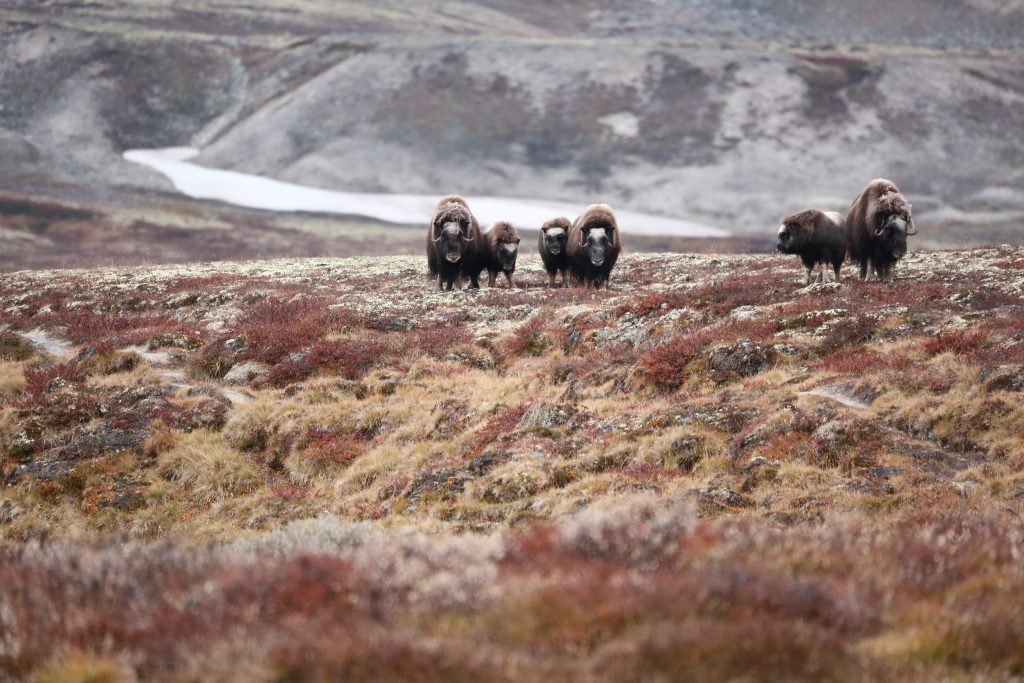
Description
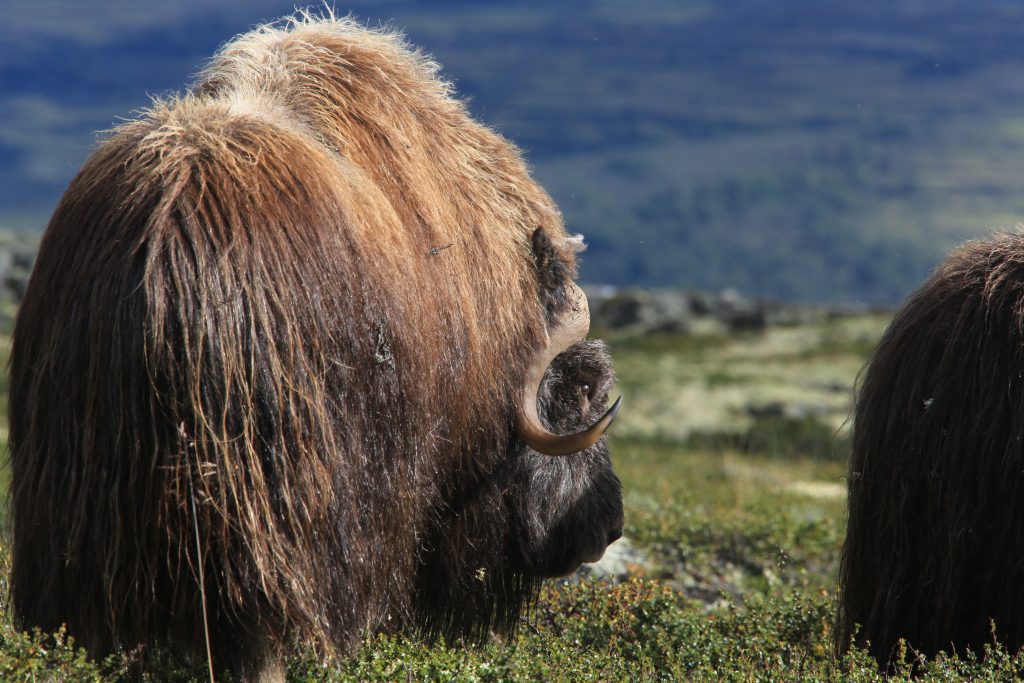
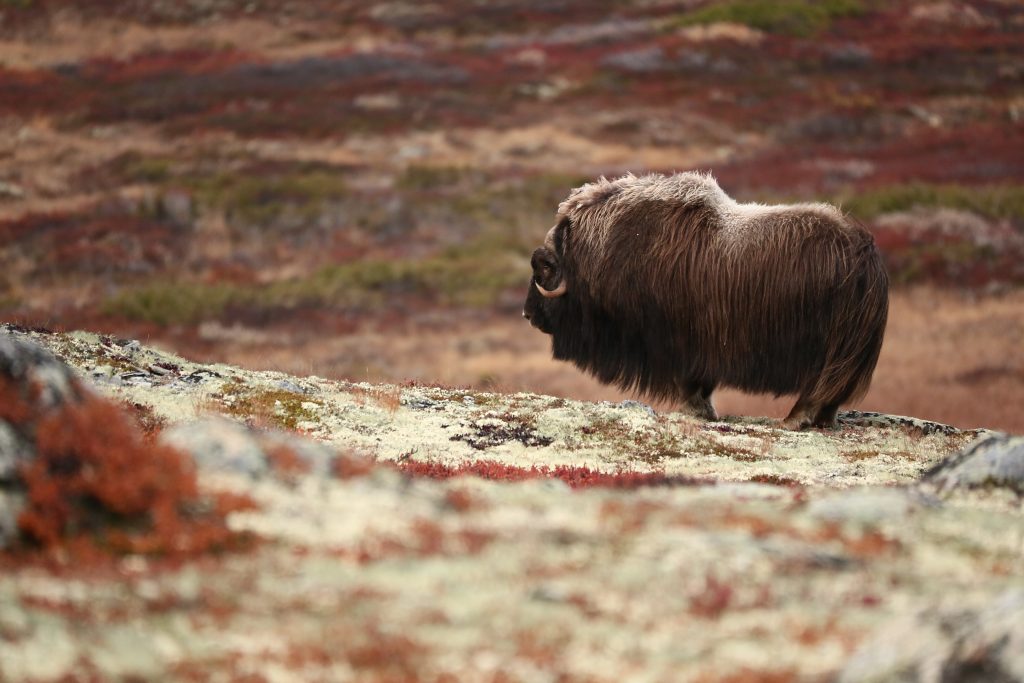
Musk ox (Ovibos moschatus) live mainly in the Arctic tundra. His pronounced tourniquet and long black dress, which make his legs look even shorter, makes him look like a buffalo. In reality, it is more akin to goats.
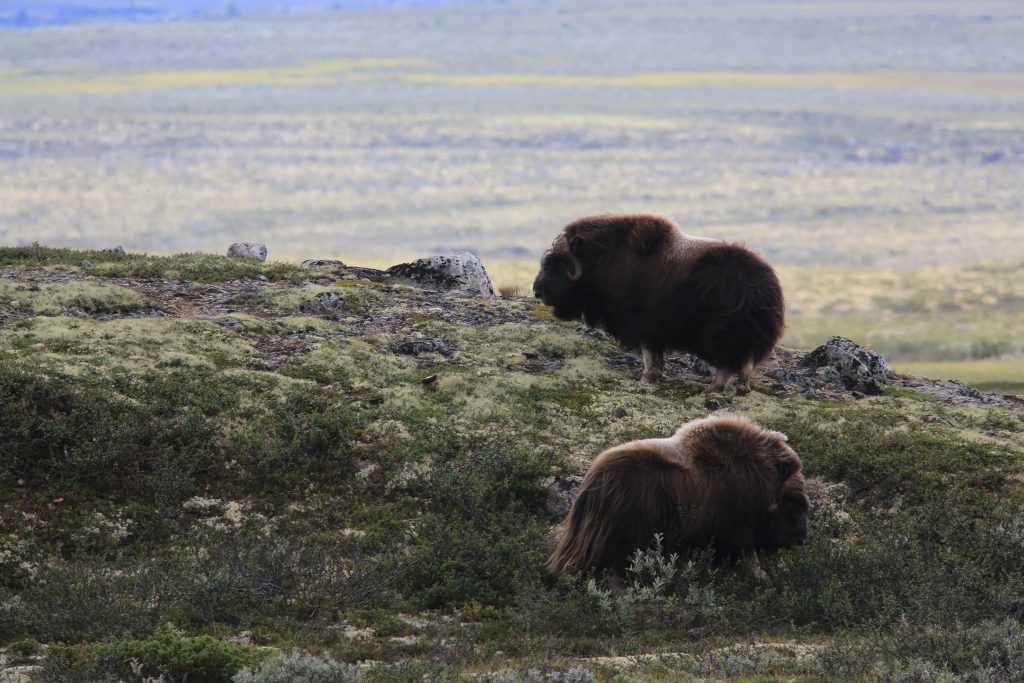
They’re not very big. Musk oxen, on the other hand, are quite heavy, compact and massive. Adult males weigh 270 to 320 kg, and females weigh about 90 kg less. This mammal, which usually moves slowly and measuredly, can also run and climb with great agility if necessary. It can run long distances and at peaks of 60 km/h.
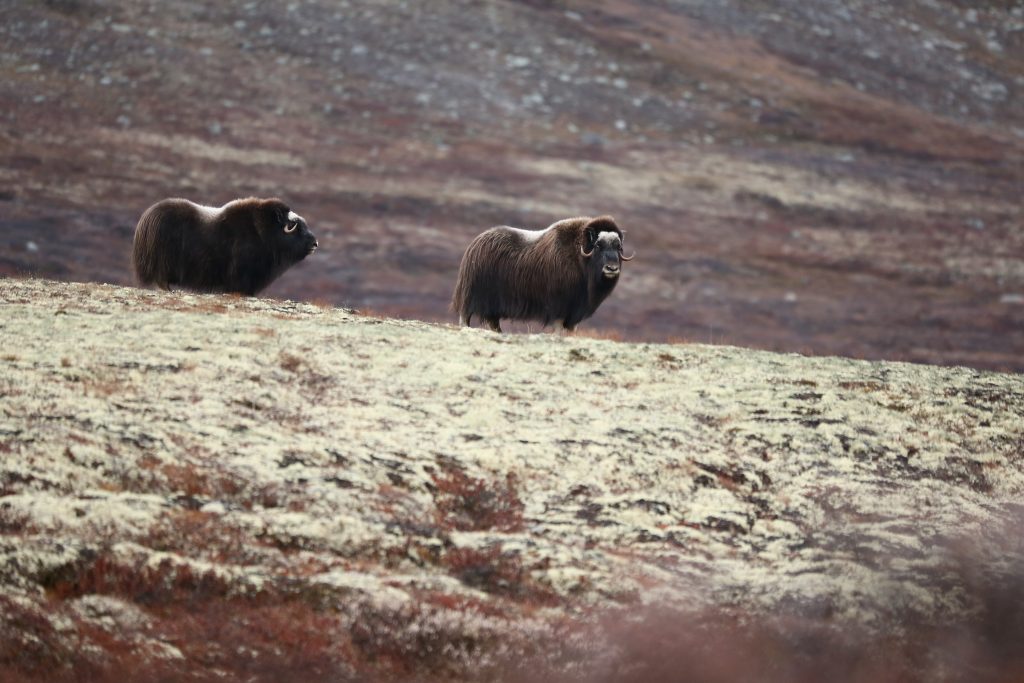
Both the male and female musk ox have impressive horns. They first draw a downward curve towards the face, then move outwards and go up in tapered ends. In males, the bases of each horn extend to the forehead and meet to form a hard horn and bone bump up to 10 cm thick. The less massive but equally pointed horns of females are separated by a band of fur on the forehead. A gland, close to the fragrant secretion orbit, is present.
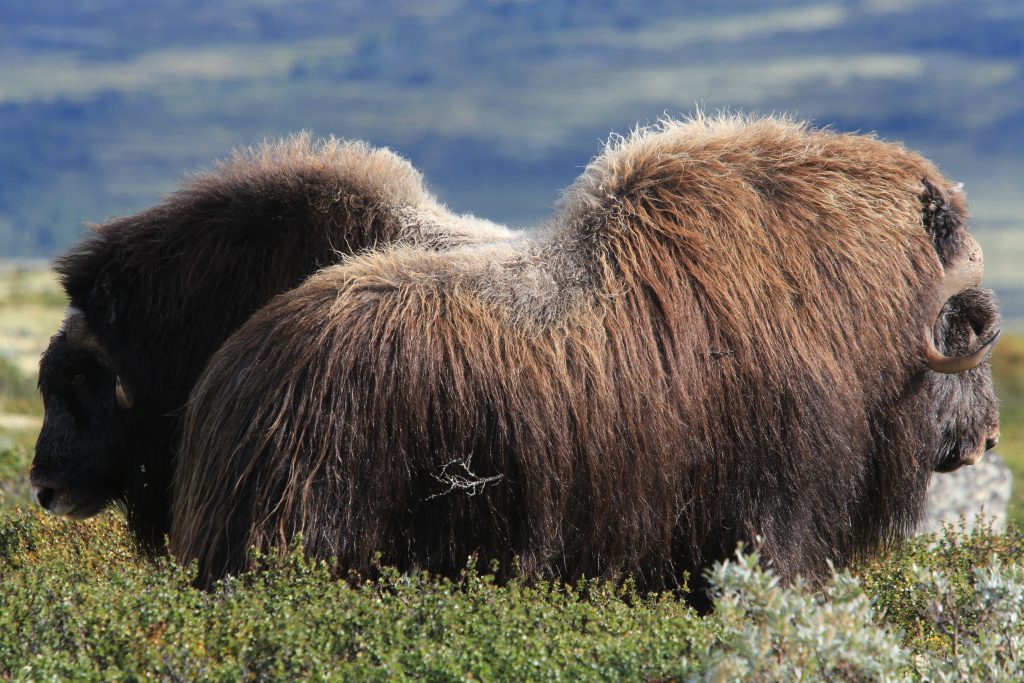
It is thanks to its coat that musk ox is not inconvenienced when the temperature drops below -40oC and this despite a strong wind. This coat consists of an insulating woolly fleece, in contact with the skin, covered with large hairs or jars. Its wool is stronger and eight times warmer than that of sheep, and thinner than cashmere. Musk ox was named omingmak by the Inuit, which means “the animal whose fur is like a beard.”
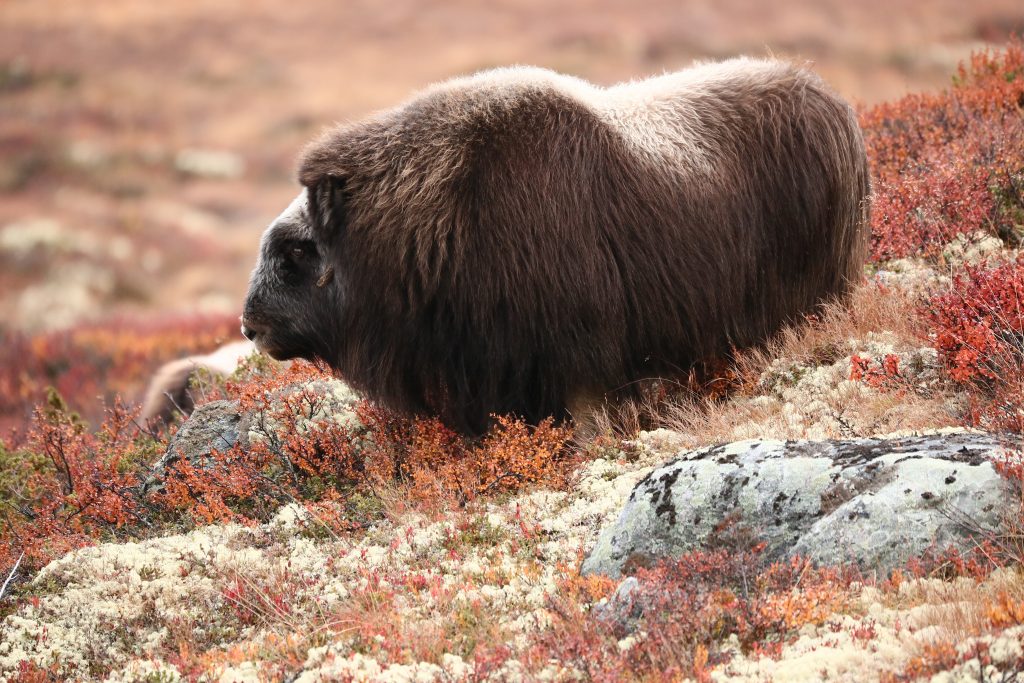
Musk oxen lose their fleece around mid-summer. As not all long protective hairs fall off at the same time, the coat looks shaggy for a few weeks. Many adult males keep the year during tufts of old wool clinging to their mane and dress.
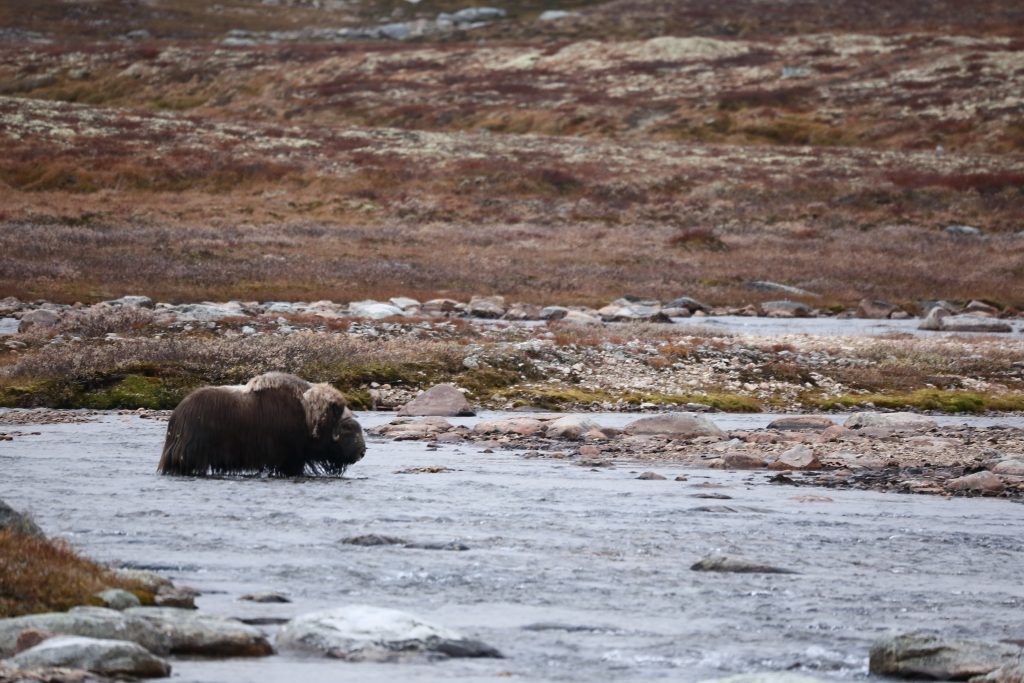
Its rounded hooves are enough to prevent it from sinking into the snow. The anterior hooves are wider than the hindquarters and allow it to dig snow in search of food.
Habitat and adaptability
Musk ox is generally found in low plains or in Arctic river valleys. The vegetation is more abundant. Low plants grow quickly producing a considerable number of flowers and rich fodder for musk ox.
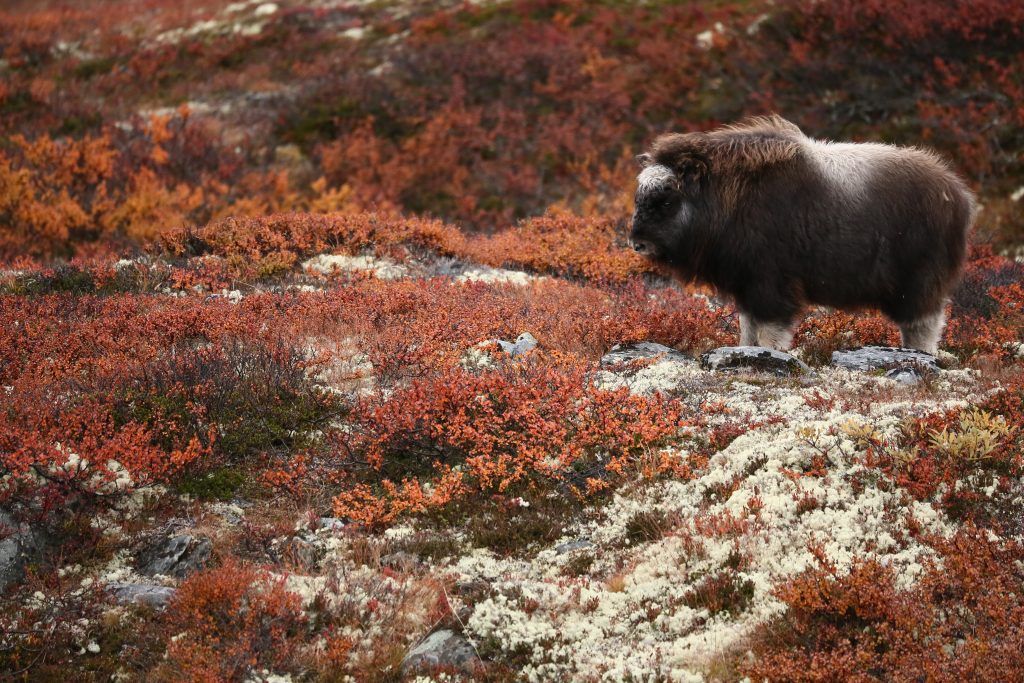
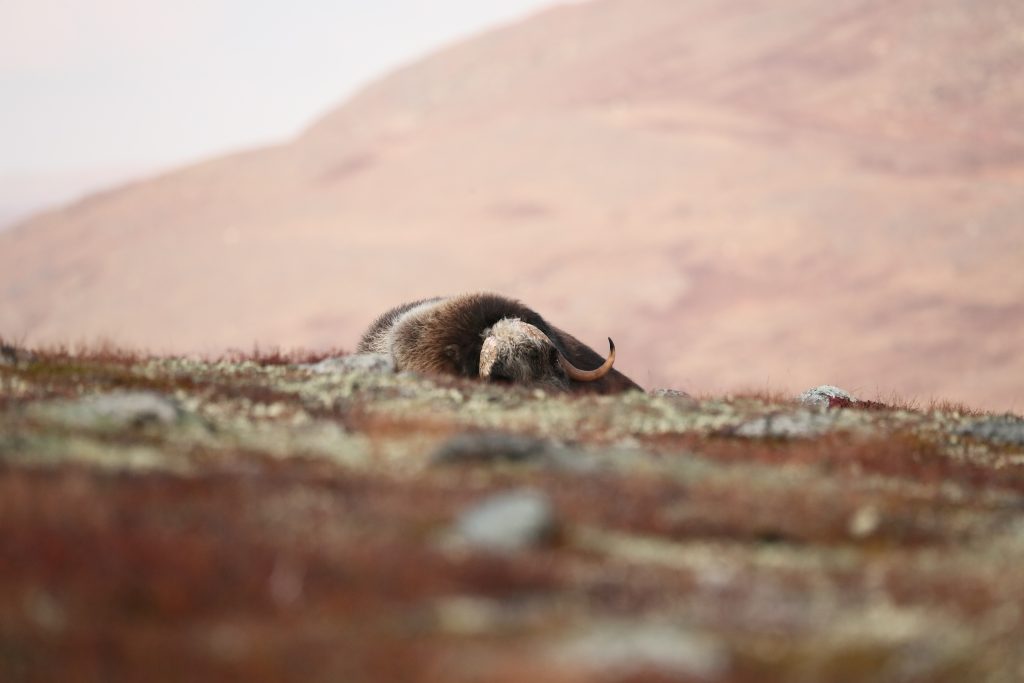
During the calving period, large herds split into small groups of seven animals, on average. Throughout the summer, these groups mainly take care of their diet but also rest. At rest, musk ox lies on its belly to ruminate or spreads to the side, legs elongated, often on snowbanks not yet melted.
Young people, instead of resting, usually stand in groups and gallop near adults or compete for fun in vigorous head-kicking fights. Adults also play occasionally, especially when crossing rivers, most often jumping and turning in shallow water.
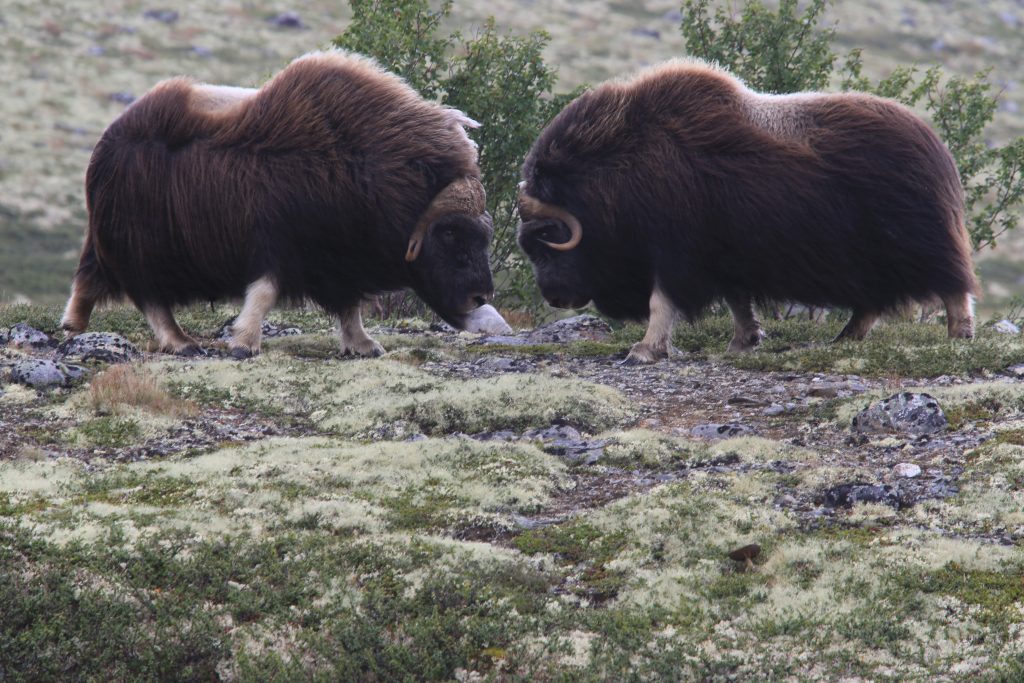
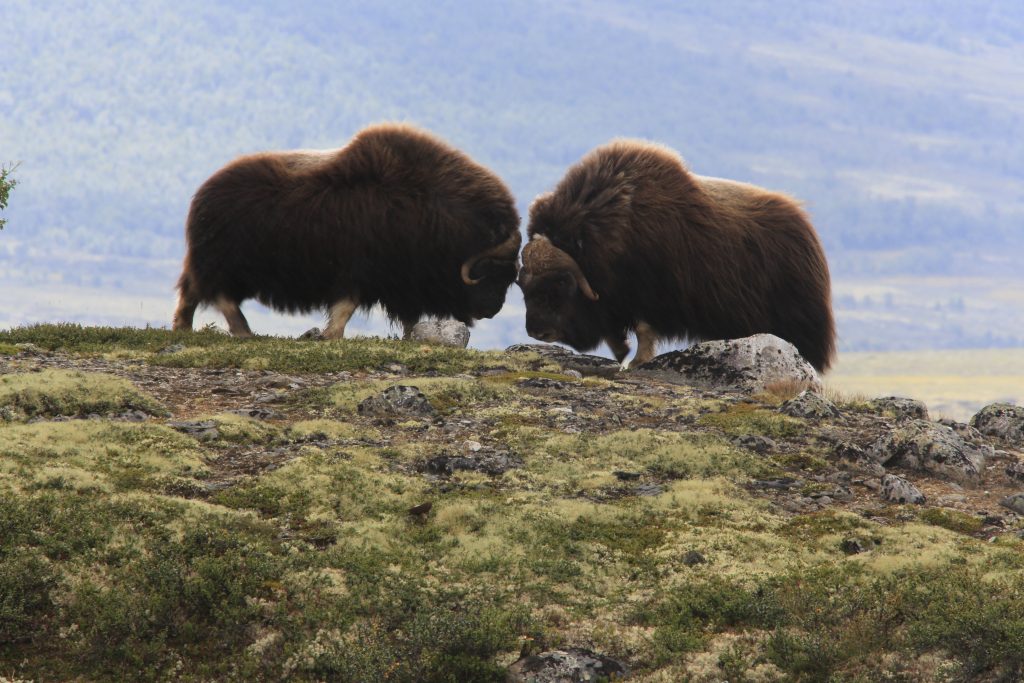
Almost at all times of the year, males engage in “one-on-one” or more violent battles. However, the frequency and intensity of these contacts increase at the end of the summer, the winner thus acquiring the status of dominant male that allows him to rule over the herd. A typical confrontation begins with threat parades in which males rub their preorbital glands against the ground or forelegs, then advance in measured steps, the horns pointed at their opponent. They then slowly recoil, swinging their heads, then dart towards each other and meet in a resounding collision. This shock is absorbed by the skull and very thick horns. If the two oxen are of equal strength, several assaults take place.
In the extreme Arctic, the sun does not exceed the horizon line between November and February. The Arctic winter is long, with temperatures of up to -15oC for nearly two-thirds of a year. Despite the cold, wind and darkness, musk ox continues to feed and rest. It is disturbed only by the very violent storms during which it lies with its back to the wind.
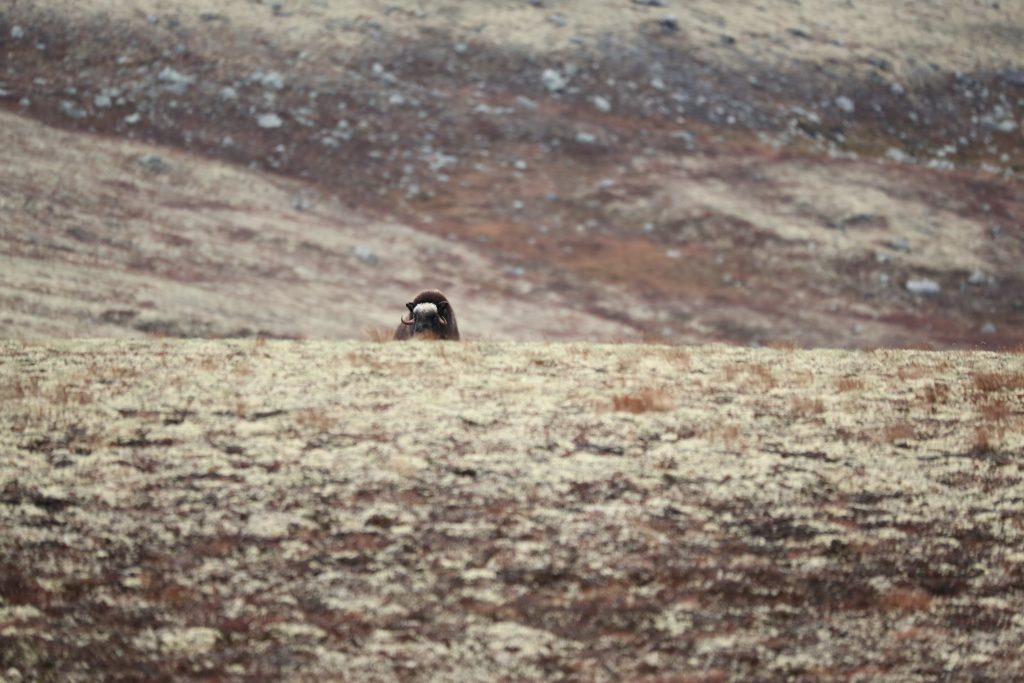
Late winter and early spring are critical times for muskox. Its fat reserves are low or depleted. The animal may well starve. If it is old, its teeth are worn out it is difficult to survive the same when it is infested with parasites or if the weather conditions are unfavorable.
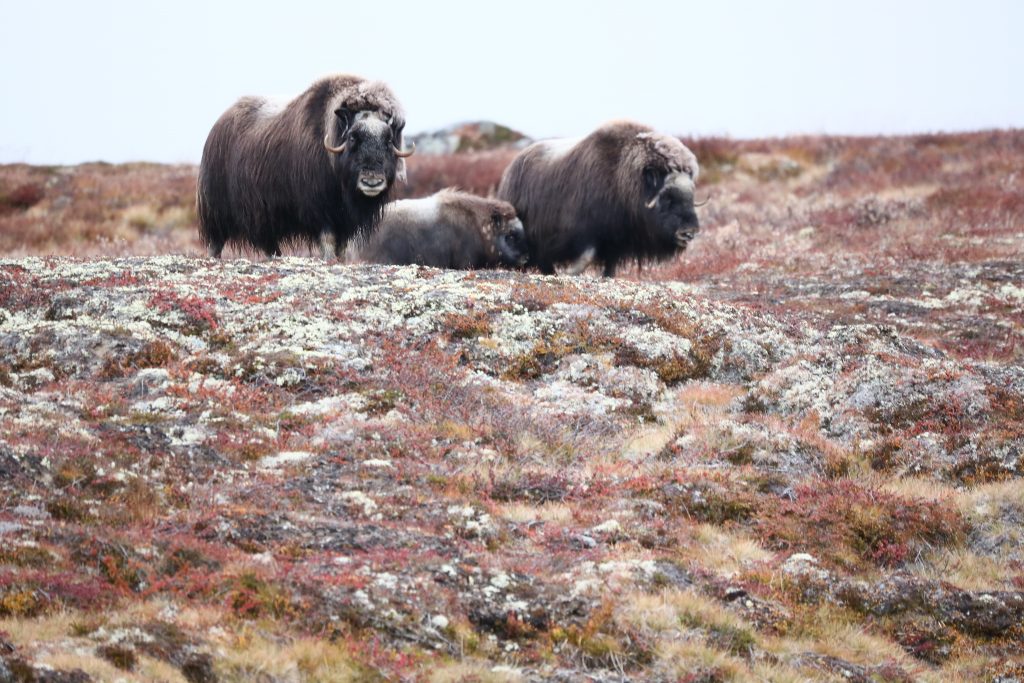
The defence of musk oxen against wolves is to run to a place covered with shallow snow or high ground and line up to face the attackers. When wolves surround them, they bring their rump closer together and form a tight circle from which adults, male or female, charge the enemy. You can see this training when they feel your presence a little too close. It is generally not recommended to get too close. During a wolf attack, the cubs quickly join their mother and get into the center of the circle. Facing the attackers, the males rub their glands vigorously. It seems to be a threat and a wake-up call.
Range
The species spread throughout northern Canada and Greenland and then moved westward to Alaska. Today, native (uninsured) musk ox populations are found only in Greenland (approximately 20,000 individuals) and in northern Canada about 100,000 individuals. There is also an introduced population living in freedom in Quebec. Finally, other populations have been introduced into Svalbard (islands in northern Norway), western Greenland, Norway (Dovrefjell) and Russia.
Power
On the mainland, musk oxen feed mainly on willows that grow along rivers, where they can better protect themselves from mosquitoes and biting flies that attack their eyes. In the Arctic islands, they are less annoyed by these insects.
As of September, snow covers the ground, and musk ox must dig to reach the willows, herbaceous plants and sedges that make up most of its diet. In most areas of the tundra, the snow mat is quite thin and does not interfere with its diet and movement. Herds often feed in valleys and lowlands where there is less than 20 cm of snow. In these places, the wind constantly sweeps the snow, creating a crust that is hard enough to bear the weight of an adult human being. When musk oxen fail to pierce this crust with their paws, they break it with their heads. They then push the pieces back with the legs, exposing the underlying vegetation. The dominant musk oxen in the herd often hunt their lower-tier congeners from these grazing pits. This saves them energy to survive the winter.
Reproduction
In late spring and summer, herds consist of males and females of all ages. As the rut season approaches, the composition of some herds changes. The herd contains an equal number of adult males and females. There is more than one adult male (dominant). It is surrounded by several adult females, young males and young males. Many males then leave the herd as a result of conflicts with the dominant bull. They then live alone or join other bulls while waiting for the mating period to be over.
During the mating period, males try to impose themselves by frequently pushing menacing dull bellows. After fighting or assaulting, the victor acquires the status of dominant male and can then rule over a herd. The cubs are born between April and June. This is a period of risk because the snowpack is thick and the weather conditions are bad. Females begin to reproduce at about four years of age and have one cub per year when conditions are good. Newborns are covered in a thick woolly coat and can stand a few minutes after birth.
The females stay with the herd. After a few hours, the mother is the cub are able to follow him. The calves moan to maintain the bond with their mother.